goalkeeper.com Originals

Editorials

Editor's Pick
The Week in Goalkeeping 33: Bizot sees red, penalty trick in Birmingham, and Trafford speaks out
highlight editorial

The Week in Goalkeeping 33: Bizot sees red, penalty trick in Birmingham, and Trafford speaks out

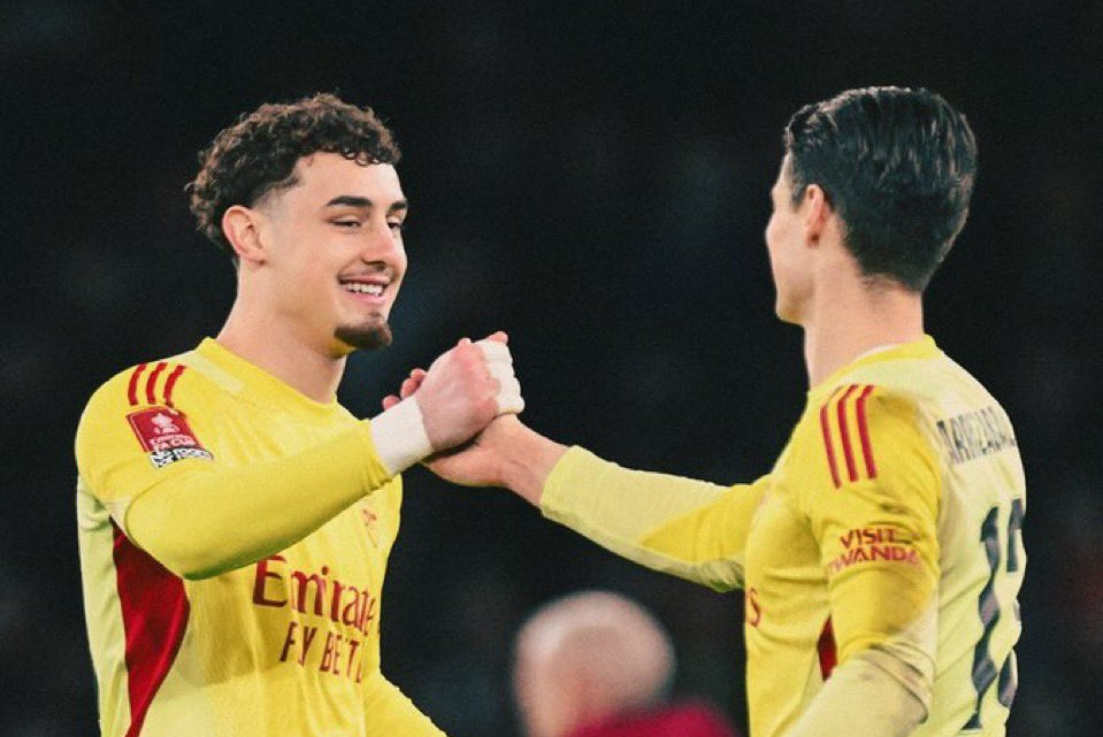
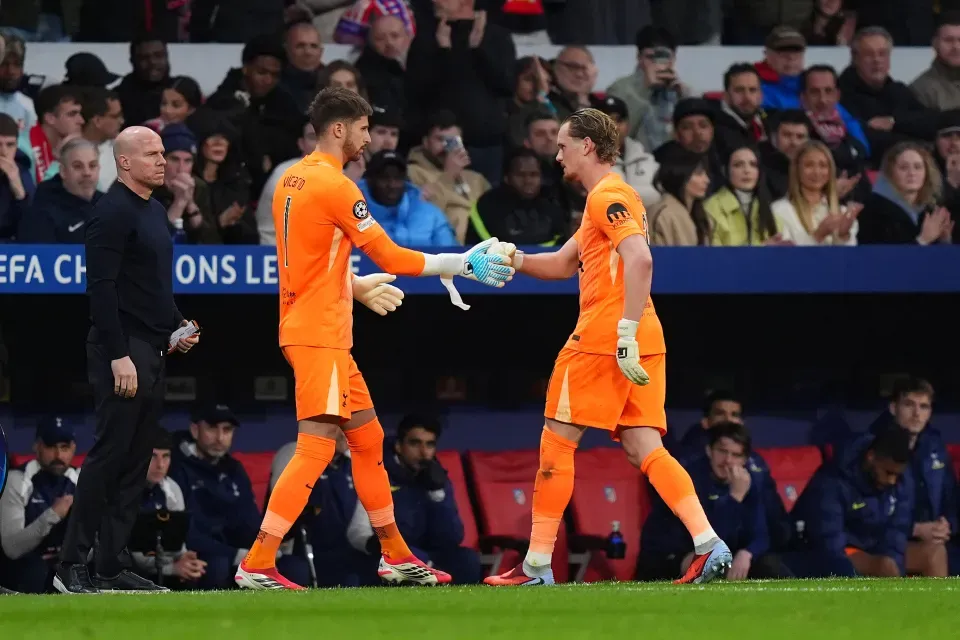
The top goalkeeper news stories from February 8th to February 15th 2026. 19 year old goalkeeper makes Arsenal home debutIn the dying minutes of Arsenal's FA Cup win over Wigan Athletic, Mikel Arteta decided to substitute goalkeeper Kepa Arrizabalaga for 19 year old Tommy Setford. Setford helped the Gunners see out their 4-0 win, in the process making his home debut at the Emirates. He had made his full debut for Arsenal in October 2024 away at Preston in the Carabao Cup, after signing from the Ajax academy in July 2024. Mikel Arteta subbed on 19 year old Tommy Setford for his Arsenal home debut this evening 👏Setford saw out the clean sheet for the last few minutes of the Gunners’ FA Cup win over Wigan.Keepers union bond 💪🧤FACup Arsenal pic.twitter.com/BMBbR1IyOd— Goalkeeper.com (@goalkeepercom) February 15, 2026 Marco Bizot sees red in the FA CupYesterday, Newcastle travelled to Birmingham to face Aston Villa in the fourth round of the FA Cup. Villa were 1-0 up with not long left on the first half clock, before their goalkeeper, Marco Bizot, committed a reckless foul on Jacob Murphy near the halfway line which left the referee with no choice but to show red to the Dutchman. Fortunately for the Toon, that one man advantage helped them in the second half as they ultimately won 3-1, marking their second win in eleven visits to Villa Park.Bayern Munich eyeing up move for Premier League goalkeeperBayern Munich are reported to be interested in Brighton goalkeeper, Bart Verbruggen. Their current number one, Manuel Neuer, suffered an injury in their most recent game and the timeline for his return is not expected to be before the four week mark. Obviously, a deal for Verbruggen can’t be completed until the summer but with Neuer coming to the end of his career, the move doesn't look like an impossibility. Robin Risser keeps clean sheet as Lens take control of title raceOn Friday, PSG lost 3-1 to Rennes giving Lens the opportunity to go top of Ligue 1 if they beat Paris FC. Lens were absolutely phenomenal as they beat the Paris side 5-0, with Robin Risser keeping a clean sheet and making six saves. That was Risser’s ninth clean sheet in the league so far this season as he continues to play a huge role in his sides title charge.Lucas Perri bottle trick helps send Leeds through to fifth roundLeeds fourth round FA Cup tie against Birmingham City went all the way with the lunchtime kick off ending in a  penalty shootout. Leeds tucked away all their penalties, but goalkeeper Lucas Perri was equally up to the mark. With likely shot locations listed on a piece of paper stuck to his water bottle, the Brazilian denied Tommy Doyle before Sean Longstaff scored the winning penalty for Leeds. It was a great moment for Perri who has lacked regular minutes in recent weeks.The water bottle tactic once again pays off in a penalty shootout ✅This time, for Leeds goalkeeper Lucas Perri against Birmingham 💪LUFC pic.twitter.com/OeI7GGUIgp— Goalkeeper.com (@goalkeepercom) February 16, 2026 James Trafford admits frustration at lack of minutesJames Trafford, who has lacked consistent game time since the arrival of Gianluigi Donnarumma has been continuing to impress in cup competitions. He kept another clean sheet in Man City’s 2-0 win over Salford on the weekend, but admitted in a post-match interview that his playing time wasn't what he ‘expected’ coming into the season and had been trying to ‘guard against this situation happening.’ ‘It wasn’t what I expected…but I’ve got to give it my best shot’ 🧤James Trafford give his thoughts on his opportunities in the Man City starting XI this season 💭MCFC FACup pic.twitter.com/lYX1HRxMAY— Goalkeeper.com (@goalkeepercom) February 15, 2026

Harry Salkeld
The Week in Goalkeeping 32: A good weekend for Hermansen, and a Man City goalkeeper to Leeds?
highlight editorial

The Week in Goalkeeping 32: A good weekend for Hermansen, and a Man City goalkeeper to Leeds?

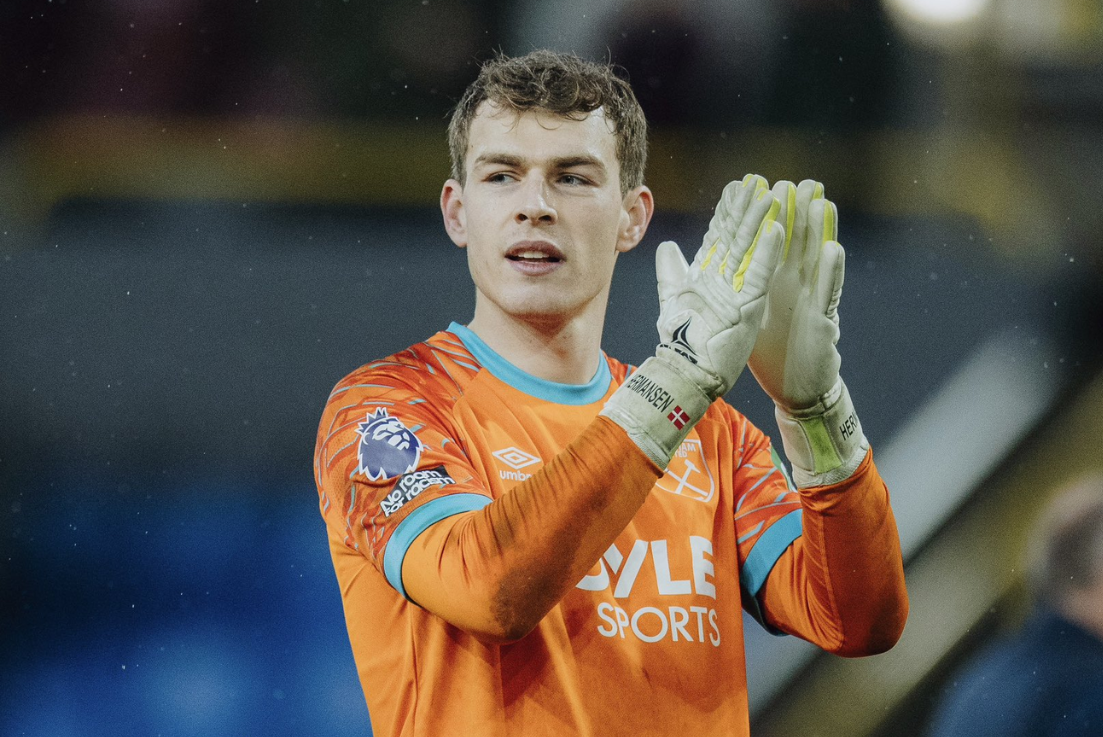
The top goalkeeper news stories from February 1st to February 8th 2026. Mads Hermansen keeps clean sheet in vital Hammers winWest Ham travelled to Burnley last weekend in a game of great importance for both team's survival hopes. The Hammers made the perfect start as they were 2-0 up within 26 minutes thanks to goals from Crysencio Summerville and Valentin Castellanos. West Ham, now three points from safety, hung on to their two-goal margin as goalkeeper Mads Hermansen - recently back in the team - made five saves and secured his side’s first clean sheet since August. A fantastic away day for the Dane and his teammates.Arsenal sign Barbora Votikova on loanArsenal Women’s have signed Barbora Votikova on loan from Slavia Prague for the remainder of the season. Votikova has played six games for Slavia Prague and made eleven appearances for fierce rivals of Arsenal, Tottenham Hotspur. Votikova will offer squad depth in the goalkeeping department as Arsenal have a congested period of fixtures, which span across three competitions for the next few weeks.Vicario prevents further Tottenham traumaTottenham Hotspur made the journey to Old Trafford on Saturday for their lunch time kick off against high-flying Manchester United. Spurs were looking for their first league win of the calendar year, with fans' patience with Thomas Frank has been rapidly wearing thing. Tottenham started the game well, with Xavi Simons pulling the strings, but Cristian Romero was shown a red card on the half hour mark.Manchester United then started to dictate the game and took the lead through Bryan Mbuemo. Guglielmo Vicario managed to make eight saves during the game, including a one-on-one denial of Amad Diallo. The game ultimately ended 2-0 but if it wasn’t for Vicario, Thomas Frank’s job could have been under even more scrutiny than it already is.Leeds eye up James Trafford moveDespite Leeds United's pretty solid season so far, currently sitting six points above the relegation zone, the goalkeeper spot has left continuous questions mark. Lucas Perri and Karl Darlow have both failed to secure the number one spot when given the chance and Illan Meslier has been phased out the squad after big mistakes last season. As a result, Leeds are looking to potentially purchase Manchester City goalkeeper, James Trafford, in the summer window if they were to maintain their Premier League status and avoid the drop.

Harry Salkeld
All Editorials

9 long-form pieces on the art and science of goalkeeping

Enith Salón interview: the Spanish World Cup Winning goalkeeper that wanted to be like Iker Casillas
featured editorial

Enith Salón interview: the Spanish World Cup Winning goalkeeper that wanted to be like Iker Casillas

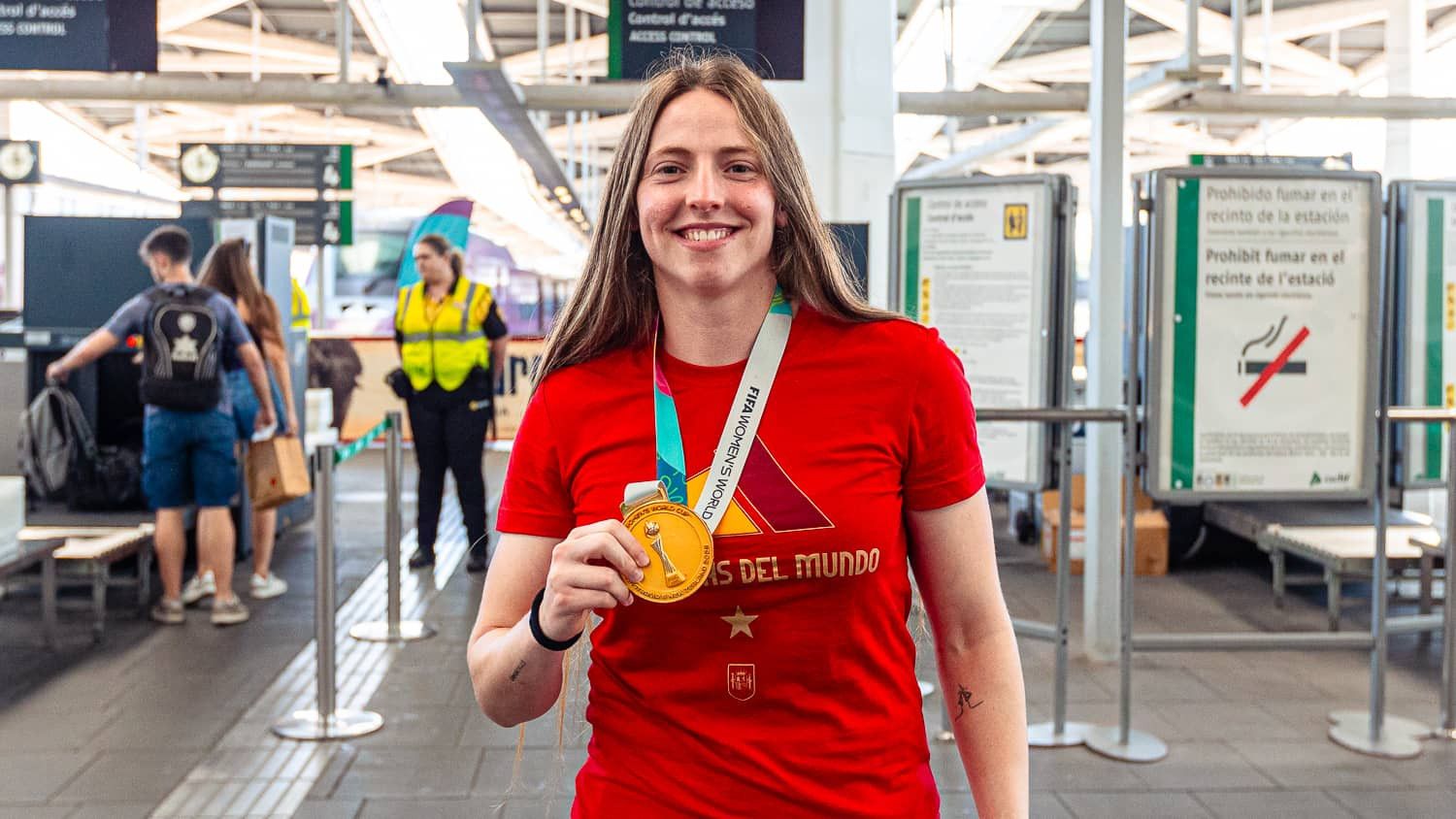
Spanish international Enith Salon discusses change in the women's game, Spain's 2023 World Cup win, and following in the footsteps of the legendary Iker Casillas…Header image: via Valencia CFThere are moments in sport that don’t just decide matches. They change lives. For Enith Salon, current Servette FC goalkeeper and Spanish international, that moment arrived on a July night in 2010, during the Men’s World Cup Final between Spain and the Netherlands. As the clock ticked into the 62nd minute, Arjen Robben burst through Spain’s back line, one-on-one with Iker Casillas. With the hopes of an entire nation hanging in the balance, Robben struck his shot, only for Casillas, stretching out his right leg, to make a stunning save that kept Spain’s dream alive.In a living room in Montcada, Valencia, a young Enith leapt up and celebrated the save just like millions of others across Spain. But as the cheers faded, something else stayed with her. In that moment, she wasn’t just witnessing football history, she was discovering her own destiny. From that day on, she knew she wanted to be a goalkeeper, just like Casillas.Hoy se cumplen 10 años desde que fuimos CAMPEONES DEL MUNDO. Tuve el placer de conseguir un sueño con un magnifico grupo de compañeros. También gracias a todos vosotros, la afición, que estuvisteis apoyando desde lejos para traer la ⭐ a casa. Y lo conseguimos! 😍 10añosdeuna⭐️ pic.twitter.com/dOGEuvDM0h— Iker Casillas (@IkerCasillas) July 11, 2020 “I always say that thanks to Iker Casillas, I became a goalkeeper. He was my mirror, my reference. Watching that save made me want to put on the gloves for the first time,” Enith tells Goalkeeper.com. “It was only later, as I got older, that I realised just how incredible Casillas’s whole career was - not only the World Cup, but everything he achieved over the years. And growing up in Valencia, I also looked up to Diego Alves who was another goalkeeper I admired and tried to learn from.”At the time, Enith wasn’t even signed up for a club. She played football in the street and at school, using jumpers or stones for goalposts. Unlike most children, she loved being in goal, even if it meant facing older boys or worrying her mother. “Nobody wanted to be the goalkeeper, but I did. I played every position, but I always had the most fun in goal,” she laughs. “My mum didn’t like it much, but I didn’t tell her every time I put myself in goal, and sometimes I’d end up taking a ball right in the face. But I just wanted to keep playing.”It was only after Spain’s World Cup triumph in 2010 that her parents realised just how much she loved football and decided to sign her up for her local club, Montcada.Within a year, both Levante and Valencia CF came calling. “I went to Levante for a trial, but I didn’t feel it was for me. I was always more of a Valencia fan, thanks to my brother. When I tried out for Valencia, I loved it. I had a great time and decided to stay.” Enith would spend more than a decade growing up in the Valencia shirt.Those years at Valencia were about pure enjoyment and growth. “I remember my first contract. I earned 200 euros a month. And honestly, that made me happy because I played for the love of the game, not for money or titles. I just enjoyed playing and that was enough for me,” Enith recalls. But after two difficult, injury-hit seasons and a relegation, she made the bold decision to seek a fresh start. In the summer of 2025, she moved abroad to join Servette FC in Switzerland. “The change came after two complicated years at Valencia. I never imagined I’d leave, but one of my last injuries made me realise I needed a fresh start - a new routine, a new challenge,” she explains.𝐔𝐧𝐞 𝐂𝐡𝐚𝐦𝐩𝐢𝐨𝐧𝐧𝐞 𝐝𝐮 𝐌𝐨𝐧𝐝𝐞 𝐝𝐞́𝐛𝐚𝐫𝐪𝐮𝐞 𝐚̀ 𝐆𝐞𝐧𝐞̀𝐯𝐞 ✍️🇱🇻Le Servette FCCF tient sa nouvelle gardienne en la personne d’Enith Salón, internationale espagnole, en provenance de Valence 🤩🔥NotreVilleNotreClub BienvenueEnith pic.twitter.com/pVn0zTlHXc— Servette FCCF (@ServetteFCCF) June 10, 2025 In Switzerland, Enith has rediscovered her rhythm and confidence, in a club that feels almost like home. Her coach, sporting director, and many teammates are Spanish. “We’ve really Spanish-ised the dressing room! But we should probably try to adapt more. Here, people speak three or four languages - sometimes five. The weather and being far from my family have been the hardest parts. Swapping Valencia’s sun for rain and fog was a shock.“The first time I wore the Servette shirt, it felt strange, but change is about growing, and I’m happy here.”That move also brought an unexpected reward: a recall to the Spanish national team. When Enith spoke to Goalkeeper.com, she had no idea a call-up was coming. “It would be an honour, but I’m not really thinking about it,” she said at the time. A week later, her phone rang. Sonia Bermúdez wanted her back with Spain.The call means she’s returning to a team where she has already achieved the ultimate dream: lifting the World Cup in Australia. “I remember that during the World Cup (2023), a lot of people said we had a team that could win it, and I thought so too - but it never crossed my mind that I’d actually be in a final, let alone win a World Cup. Everything just clicked. The people, the experience, the packed stadiums, it was all incredible.”She openly acknowledges that without the group of players known as Las 15 demanding changes and refusing to return to the national team until there were more professional conditions, she would not have received that first call-up. “If it hadn’t happened, I wouldn’t have been called up, but once it did, we young players got ready. Nobody wanted to go against teammates, but being called up to represent Spain is an enormous honour.”She was so aware of that unique situation that she even asked Alexia Putellas for her shirt after a pre-World Cup friendly, “just in case I never got another chance.” But she did—and helped secure Spain’s first star on the national team crest.Now, Enith Salon is not just a champion, but an inspiration herself, dreaming of Champions League nights with Servette, wanting to enjoy a well-earned call-up by the national team, and inspiring the next generation - just as Iker Casillas once did for her.

IV Irati Vidal Asla
Jean Butez exclusive: Como’s level-headed number one on pressure, pressing, and passion for Cesc Fabregas’ exciting project
featured editorial

Jean Butez exclusive: Como’s level-headed number one on pressure, pressing, and passion for Cesc Fabregas’ exciting project

Como number one discusses his move to Italy, embracing Fabregas’ tactics, and the club’s ambitions.Photos by permission of Como FC. It's been a fascinating journey to the top of the beautiful game for Como 1907 goalkeeper Jean Butez, who's thriving under the tutelage of Cesc Fabregas and in contention to be selected for Didier Deschamps’ France squad for the upcoming World Cup.Having started out at Lille, before moving to Belgium, where he made his debut and truly began to flex his muscles at the professional level, and then venturing to Italy, Butez's path has been far from orthodox.Recollecting fondly the days that shaped his love of the goalkeeping role, one moment in particular stands out for Butez. “I'm pretty in love with this position for many reasons. So my first memory will be….”, he pauses and thinks, speaking to Goalkeeper.com. “Penalty shootouts.”“When we were young in my small village, we won a tournament in the final, in the penalty shootout at the end. I have this picture at home with my hat and then these gloves - they were too big for me - but I remember feeling kind of like a hero after the game. It's really something that gives you such a nice feeling for the goalkeeper position.”Now 30 and at the peak of his career, Butez’ reflections on how it all began make for intriguing listening. Despite the uniquely goalkeeper experience of denying the very thing which brings football fans joy (especially from the penalty spot), the Frenchman’s footballing tale began beyond the post when he first trialled with Lille as both an outfield player and a goalkeeper.  “I remember reading part of an interview with Manuel Neuer, and my beginnings in goal were pretty similar to his. I started out as a football player. I was really into the game, not really as a goalkeeper at the beginning. I was scouted by Lille as a goalkeeper and as a player. I did both trials, and then I was selected as a goalkeeper, so I stayed in goal a bit by choice of Lille, and from that moment, I didn't move position,” he recalls.His influences between the posts extend far beyond the legendary Neuer, for the likes of Fabien Barthez, fellow Lille alumni Mike Maignan, and former Como colleague Pepe Reina, who he speaks of with real fondness, have all helped mould him into the superb gloveman he has become.“I think I tried to pick up some tools from the experienced goalkeepers next to me, tried to speak a lot with them about training, about gym sessions, about games on the pitch. For me, one of the most important things to learn is to speak with guys who have had big careers and big games behind them, like Pepe [Reina]. It was amazing to speak and train with him at 42 years old. He still had this hunger to play, to win. It was unbelievable to see. Every day, it's a chance to learn something from someone else,” Butez explains.Words of praise were reserved for Marc-André ter Stegen, David de Gea. and Ederson too, all icons he idolised. “I was playing when he (ter Stegen) was there at the top. And I was like, wow, this guy is what I want to be. And then, of course, de Gea for his reflexes, Ederson for his long kick and ter Stegen for his vision, his anticipation, his positioning, and his calmness. Also Neuer for his charisma, his longevity. For me they are the best goalkeepers in the world,” he notes.Butez also gives special mention to Karim Boukrouh, a goalkeeper coach at Lille who's now at Troyes in France’s second division. Boukrouh is a figure who helped tremendously in his development and encouraged Butez to be a sponge and learn from the elite whenever possible. While joining Como has been the pinnacle of his career so far, initially leaving for Belgium was instrumental towards him laying the foundation for his success at the top of the sport. Firstly at Mouscron, then at Royal Antwerp, where he was part of a quality side that clinched a magnificent treble.Catching the attention of Como courtesy of his all-round abilities, and particularly his polish with the ball at his feet, Butez didn’t have to think twice when the ambitious Como came calling, especially considering he was in a tough spot at Antwerp at the time. “Of course the project is one important thing, but I also really wanted to play because I was on the bench for six months in Antwerp. It was not an easy situation,” states Butez.“They wanted to sell me, but there was also the situation with Senne Lammens (now of Manchester United). Como was one of the teams interested in me and I felt it was a really nice project in a nice environment.”Getting to work with a coach like Fabregas was clearly something that appealed to Butez, as was the progressive and expansive philosophy the Spaniard has implemented. “I knew him as a player, not that much as a coach, but when you talk to him, and to the sporting director, they explain to you a bit more about the project, the style of play of the team, you know that it will fit with my style of play as well,” insists the experienced netminder.Fitting the bill perfectly of what Fabregas wants in his goalkeepers, the Frenchman has slotted in seamlessly to help bring the Spanish tactician’s exciting brand of football to life. Essentially acting as a playmaker to instigate attacks from the back, the technically assured and press-resistant Butez has been exceptional.A fine embodiment of his manager’s intricate approach, how Butez has combined confidence, composure and execution has been crucial for Como in baiting and bypassing the press. Indeed, there's been much to admire about his output in possession, as his ability to serve as the free man and invite said pressure to manipulate the first wave before then finding the free man has been a joy to witness and of immense strategic value.“The goalkeeper is really important for him (Fabregas), because we know that with the goalkeeper, you are plus one in every situation,” asserts the shot-stopper. “So if you are secure, calm and ready to deal with some pressure with the ball, then yeah, you will find a way to escape the press. We work a lot on this.” Relishing this responsibility, his bravery, vision, and range of passing has helped make Como one of the most entertaining outfits to watch in Europe. Butez’s intelligence to adapt to Fabregas’s complex demands serves as a testament to his adaptability and footballing IQ. Choosing when to go long, clip passes to the full-backs, strike penetrative line-breaking vertical passes or play short passes, Butez has handled all manner of scenarios with clarity.Fabregas’ outfield framework is also important in ensuring that Butez always has a host of options to exploit Como’s numerical and positional superiorities in possession.“We train a lot of different options during the week. So now we are confident in different aspects of pressure. We know what to do if they come man to man, we know what to do if they come only with two strikers, and then I will be the free man, so I can drive the ball a bit more if the pressure is coming. I can be the playmaker, and then I'm the guy who decides at the end,” Butez acknowledges.Work away from the pitch has been equally important in Butez’ preparation for different opposition. He undertakes his own video analysis, and utilises specific footage provided by the coaching staff to give him some vital extra information on the tendencies of teams’ attacking players from open play and penalties.“About two days before the game, every goalkeeper receives videos of every striker and every offensive player to see what are their strengths, what they are doing the most in front of the goal and the penalties. I watch the game and how they press the goalkeeper. I like to see this. I like to prepare myself in tandem with my mental coach. I'm a goalkeeper split in two mindsets, the attacking way and the defensive way. You talk about preparation, but it's the kind of preparation you do that matters,” Butez divulges.One way that Como have aided their goalkeeper department’s preparations is through the use of Goalkeeper.com data. Butez is clear on his belief in data. “I think it's the future of goalkeeping”, he states emphatically.“For me, okay, clean sheets are something nice for the media, for the TV, and good to see how we are doing well as a team. But for me, goalkeeper-specific data is important, because I think what Como did with me..they put me in the goal in Serie A where I never played, and knew it would work - because they think differently.”His adjustment to life in the picturesque confines of Como has been equally impressive. The process has been smooth sailing for the level-headed Butez. He admits that there have been no issues with the language or settling in with his wife and two children, which he credits to not just being prepared for this step and the club’s support, but also to his personal investment in this move.“I really wanted to move, so it was easy to adapt because I wanted this new life, this new environment. It was easy with the language. It was pretty fast, because I took some lessons, but French and Italian are pretty similar. So for me, it was not that difficult because I wanted this, and I prepared myself for this. When you want something, when you work for it, when you prepare for something, then it will happen,” tells the Frenchman, who inked a three-year deal at the Sinigaglia.Another key to his success has been the ongoing presence of a psychological coach, something he attributes as a pivotal factor both on and off the pitch in handling all that’s thrown at him. “I’ve had a mental coach [psychologist] for a long time. You need to find stability on the pitch. And maybe it will be a bit like this off the pitch, because you need to manage your family moving. You may need to manage finding a new house. You need to manage everything from Belgium to here, but on the pitch you need to be calm as much as possible. So it was good to work with this coach, and I've continued to do so,” says Butez.Loving life in Como and under the guidance of the tactically sophisticated Fabregas, there are no signs of Butez or the club slowing down anytime soon, so expect both parties to keep along their remarkable upward trajectories. “We are going fast, but we have the quality to do even better. We have some objectives now, and we are working towards them. We have all the facilities to do this work well,” Butez spells out.“And then the fans are beautiful, they are pushing us. And then also they will demand more from us because they will want to see more of this kind of football in these kinds of exciting games and then victories. So as a team, and also as a goalkeeper and as an ambitious guy, I want more and I'd like to play again in Europe and enjoy this kind of crazy atmosphere around Europe. It can be a long process, but it can also be a short win for the team to grow even faster than we think.”For the man who’s emerged as a serious contender for a place in France's 2026 World Cup side courtesy of his terrific form, it’s all about enjoying every moment and remaining present, knowing this won’t all last forever. This is exactly the sort of advice he'd pass on to any emerging goalkeepers crafting their careers, advising them “to smile every training you have, listen to your coaches, enjoy what you are doing and then be in the moment, being there every moment, because this is the most important thing,” first and foremost.Wise words from the engaging Frenchman, who knows only too well how quickly a career can change for the better. 

ES Edward Stratmann
Antonin Kinsky: is substituting a goalkeeper ever justified?
headline editorial

Antonin Kinsky: is substituting a goalkeeper ever justified?

Breaking down Kinsky's substitution vs Atletico Madrid last night. Antonin Kinsky will have awoken this morning wondering if it was all real. The 22 year old Czech goalkeeper endured a nightmare Champions League debut last night at the hands of both a ruthless Atletico Madrid attack, and his own manager Igor Tudor. Tudor, already under pressure only weeks into his new role as Tottenham Hotspur manager, chose to start Kinsky over Guglielmo Vicario for the Round of 16 tie.Despite Spurs’ poor league form, Vicario had kept the most clean sheets of any goalkeeper in the Champions League this season prior to the fixture in Madrid, with six in eight matches. Post-match, Tudor justified his selection of Kinsky simply by stating that ‘playing Kinsky was the right call, he’s a talented GK. Then something happened… I’ve never seen anything like this in 15 years.’So what happened?Spurs found themselves 3-0 down within 14 minutes and 59 seconds at the Wanda Metropolitano - the earliest a team had ever fallen three goals behind in a Champions League knockout match. Two of those goals had come from two admittedly disastrous moments from Kinsky - though one was more outright an error than the other. On the five minute mark, the Spurs goalkeeper slipped in the six yard box attempting to clear the ball long, skewing his kick with the ball picked up by the Atletico attack on the edge of the penalty area. Marcos Llorente eventually finished low and hard past Kinsky. The Czech goalkeeper seemed to slightly misread the shot, reluctant to fully extend as the drive fizzed into his bottom right hand corner. As with many goalkeeper errors, the reality of the situation is never black and white. Had one of the four Spurs defenders managed to nick the ball away from one of Atletico’s attackers, or got a block in as Llorente’s struck the ball, then we may not be writing this article, and Kinsky may well have gone on to have an uneventful night. Jamie Carragher and Thierry Henry both picked up on Spurs’ defensive disorganisation when dissecting last night’s events. But the goalkeeper position is a confidence position. And the 22 year old suddenly looked like he was feeling the pressure. The more glaring moment came with Atletico’s third goal. Kinsky again slipped trying to clear, but this time skewed the ball straight into the path of Julian Alvarez. The Czech goalkeeper resigned himself to his fate, burying his head in the turf as Alvarez finished into an empty net.And then Kinsky’s evening was over. Tudor hauled the young goalkeeper off in place of Vicario in the sixteenth minute, failing to even acknowledge him as the teammates consoled him down the tunnel. Kinsky even drew a pitiful round of applause from the Atletico faithful. TNT Sports’ commentary pairing of Darren Fletcher and Ally McCoist expressed their disbelief.‘That’s on the manager,’ Fletcher exclaimed immediately. McCoist played devil’s advocate. ‘You could make the argument he’s got to do it, because you cannot make mistakes like that…schoolboy errors,’ though admitted he felt for Kinsky.Erm. Spurs manager Igor Tudor has substituted Anton Kinsky whilst 3-0 down against Atletico Madrid.…🤔UCL Spurs pic.twitter.com/jBIbkWugtM— Goalkeeper.com (@goalkeepercom) March 10, 2026 But they weren’t really ‘schoolboy errors’ in the typical sense. Kinsky slipped, twice. It’s not an excuse, but a true representation of what happened. There is little room for bad luck in goalkeeping, and no room under the lights in the Champions League knockout rounds. Stud trouble, misfitting boots, or a lack of concentration or distraction, Kinsky really drew the short straw last night. In the studio, Joe Hart and Steve McMannaman slammed Tudor’s decision. ‘He's had a bad 14 minutes, there's absolutely no getting away from it. Even the stadium is feeling sorry for him. You see Tudor doesn't even acknowledge his goalie. If that's man management, I'm flabbergasted’, remarked the ex-England number one live on TNT Sports."They're saying don't worry, we're here for you!" ❤️ Joe Hart and Steve McManaman react to the substitution of Antonín Kinský after a difficult start for Tottenham Hotspur 💬📺 @tntsports & @discoveryplusUK pic.twitter.com/h1mT5Jwr3P— Football on TNT Sports (@footballontnt) March 10, 2026 ‘He's acted like that's not the 14th minute and that doesn't happen at any level, I'm talking Sunday league. This is the Champions League. Yes, he's had a bad moment. Has he done it on purpose? Course he hasn't. Stand by your team, send a message. No, [he] stands there, pretends it's not happening, and moves on’, Hart continued. On social media, Manchester United legend David De Gea perhaps summarised it best: ‘No one who hasn't been a goalkeeper can understand how difficult it is to play in this position. Keep your head up and you will go again.’The Spaniard captured the sentiment that most fans were feeling.  Is Kinsky’s career really ‘over’?On CBS Sports, Premier League legend Peter Schmeichel commented that "this will be a moment that everybody in football will remember when they see or hear (Kinsky's) name...You've got to stick with him at least until half-time... He's absolutely killed his career. I feel really sorry for him." Thousands of others echoed words to this effect on social media. The sentiment is understandable - this will linger on the goalkeeper’s CV like a bad smell - but last night doesn’t seem career-ending. As mentioned, many comments seem to use Karius’ Champions League Final disaster in 2018 with Liverpool as a benchmark for the consequences of high-profile errors, but the circumstances of Karius’ errors were totally different. First, the scale of the match was entirely different. A Round of 16 first leg tie will not go down in history in the same way as Liverpool's first Champions League final in 11 years. The stakes simply aren’t as high. It may not have seemed that way in the moment last night, but zooming out, this fixture won’t have the same longevity - especially if Spurs' season continues on its current trajectory. Oh my word! 😮A disaster for Loris Karius!Real Madrid lead in the UCLfinal pic.twitter.com/zgX9XRwdAM— Football on TNT Sports (@footballontnt) May 26, 2018 Second, Karius wasn’t in a position to receive some respite due to age, career experience, or the decision to play him. Nobody else was going to play in that final apart from Karius. He already had two - nearly three - full Bundesliga seasons under his belt and made 19 appearances for Liverpool in the 2017/18 season. In comparison, Kinsky has made six appearances for Spurs, with the bulk of his career outings coming in the Czech leagues. The expectations simply aren’t the same, exemplified by the common questioning of why Kinsky had been selected for such an occasion in the first place. In an odd way, this helps his case. Antonin Kinsky is 22. We shouldn’t forget that he gained several plaudits on his Spurs debut against Liverpool last season, showing a maturity, ball playing, and shot stopping ability beyond his years. He will come good. The only reason for long-term damage to Kinsky's career would be artificial re-earthing of the event, or an undue amount of focus placed on it, as if it was representative of his entire ability - which is obviously an unreasonable position to take.No analyst or coach worth their salt should place long-term value or a judgement on potential from an entirely anomalous performance like last night's.All the hugs for new Tottenham goalkeeper Antonin Kinsky. The 21-year-old signed for the club three days ago then made six saves to keep a clean sheet against high-flying Liverpool 🧱 pic.twitter.com/GA6LwIsGKk— B/R Football (@brfootball) January 8, 2025 ‘Outfield players get subbed for poor performances, why not goalkeepers?’ All of the furor and hyper-sensationalising we’ve recounted in this piece exemplifies exactly why there is a difference between shining a negative spotlight on a goalkeeper, and hooking off one of ten outfield players. The reality is that outfield players can hide in a way that goalkeepers can’t. Not on the pitch, and not in the media. Even from an optics perspective, outfielders will usually slip off the pitch at the nearest exit. Kinsky’s substitution brought what essentially amounted to a walk of shame, all the way from the penalty box to the tunnel. It was perfectly symbolic of the sheer intensity of the spotlight that Tudor’s decision brought upon the 22 year old. So let us ask this question: if Kinsky hadn’t been substituted, would we still have the volume of headlines about and coverage of his performance last night? It’s highly unlikely. The manner of Kinsky’s substitution also emphasised the difference between outfield and goalkeeper substitutions. Kinsky was substituted because he was clearly held individually responsible for the situation that Spurs found themselves in. Tudor’s actions implied that Spurs were 3-0 down majorly because of Kinsky, and that removing him would improve things. Tudor admitted post-match that ‘It was too much for us in this moment when we are fragile, when we are weak.’The point of a substitution is to positively affect the game in some manner, therefore implying that a player remaining on the pitch is affecting - or going to affect - the game negatively, whether through performance, fitness, or tactical role. But the caveat is that to substitute a midfielder, for example, implies generally that there is an imbalance in the unit as a whole. There is no goalkeeper ‘unit’. It is one single person. Therefore a judgement of their impact on the game sits wholly and solely with them. In comparison, when outfield players - especially strikers - make ‘errors’ (e.g. missing an important chance), the fault does sit individually, but they are generally thought of as one part of a broader attacking move. ‘Is substituting a goalkeeper ever justified?’A pure pragmatist could make the reasonable judgement that Kinsky needed to be replaced because, A), his performance did not merit his continuing contribution to the game, B) his head was proverbially ‘all over the place’, and C), Tudor was actually protecting his goalkeeper. People often say that difference is strength. In many walks of life that can be true. It doesn’t always apply to goalkeeping. Goalkeepers are different. We all know that. But a ‘1 and 10’ mentality, rather than a genuine team of 11 mindset, can create isolation just as much as uniqueness.That being said, if one does genuinely view a goalkeeper as one and the same as the other ten players on the pitch, then by that trail of thought he or she cannot be immune from the natural processes of the game. Play badly, get subbed. But the fact remains that the goalkeeper position is already isolated, and any further perpetuation of that is incomparably mentally destroying, especially when done in last night's manner. Goalkeepers willingly stand alone. The least they can ask for in return is protection when their own bravery means they inevitably take a hard hit. In last night’s case, much emphasis should of course be placed on the timing of the substitution. It would be damaging for an outfield player to be substituted within fifteen minutes. Had Igor Tudor at least waited until half time to take Kinsky off, he would have reduced the spotlight effect that makes a goalkeeper substitution so much worse. 'It was, before the game, the right choice to do in the moment like we are, with the pressure on Vicario, another competition. Tony is a very good goalkeeper. It was for me the right decision. After this, of course, it’s easy to say that it was not the right decision. So I explained to Tony also, speaking after: he’s the right guy and a good goalkeeper’, Tudor explained after the game. ‘Unfortunately, it happened in this big game, these mistakes. He was sorry. The team is with him, me too. I was speaking with him. He understands the moment, he understands why he goes out. As I said, he’s a very good goalkeeper. We are with him, we are all together. It’s never about one player. It’s happened. It’s the Champions League again. We paid [for] this start of the game.'In purely practical terms, it’s not that substituting a goalkeeper is literally never justified, but a question that should also be considered is this: What is a manager’s role? To develop and improve their players, or to produce results at all costs, through Machiavellian means or otherwise? In last night’s case, Tudor wasn’t proven right. The ends didn't justify the means. Spurs conceded five overall, two with Vicario in goal. The team remained ‘fragile’, to use his words. So, if the purpose of a substitute is to positively impact the game, then Tudor’s decision ultimately failed - to some extent at least. When a goalkeeper makes an error, the spotlight naturally shines brightly enough. When their failings are further highlighted by their own manager, let alone anyone else, that sense of positional ‘uniqueness’ simply becomes abandonment. And in the Spanish capital last night, with 16 minutes on the clock of a Champions League fixture between Atletico Madrid and Tottenham Hotspur, few people would have felt more abandoned than Antonin Kinsky. 

SH Sam Hudspith
Raya vs Donnarumma: Goalkeeper.com data featured on Sky Sports
headline must read

Raya vs Donnarumma: Goalkeeper.com data featured on Sky Sports

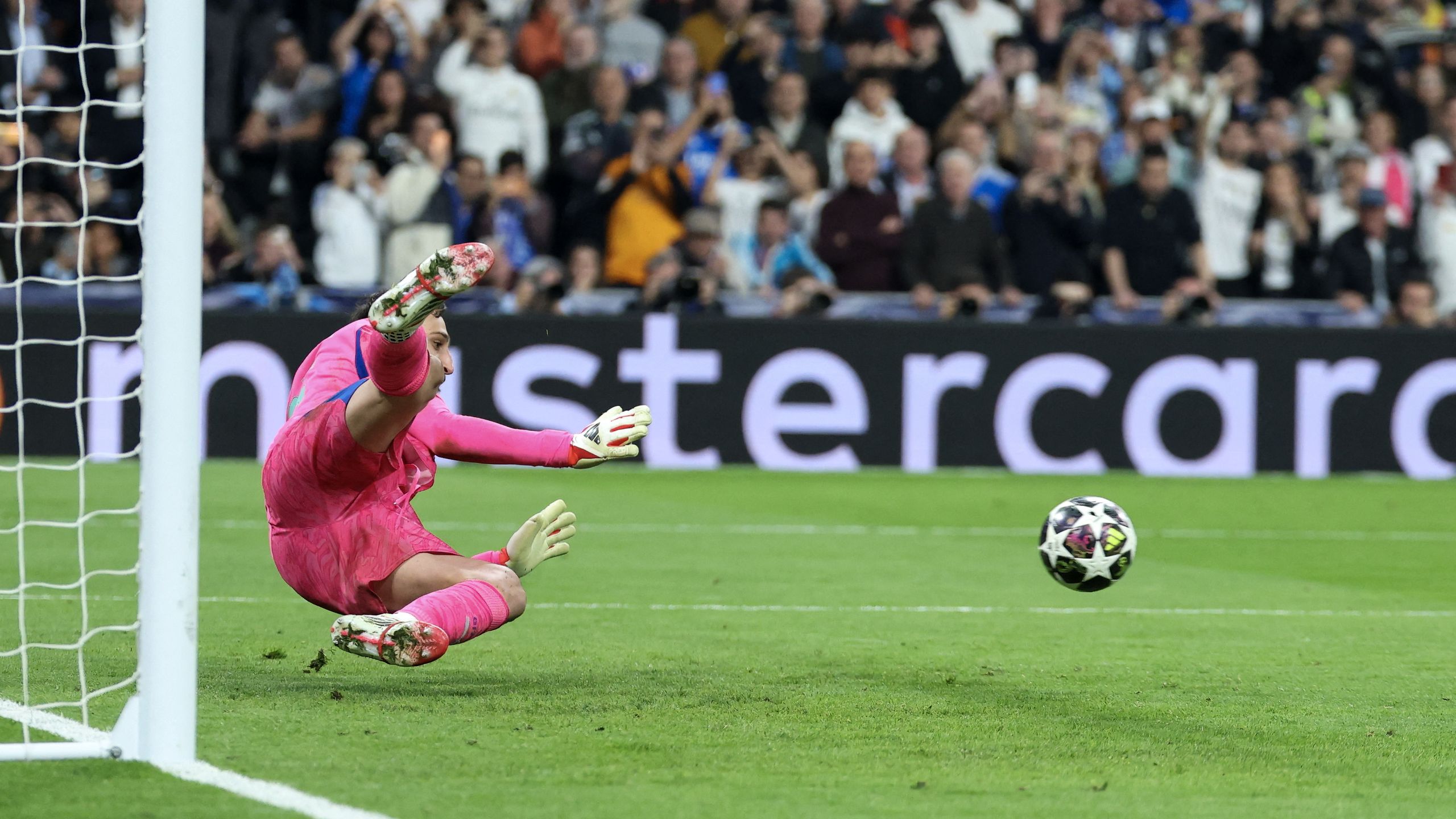
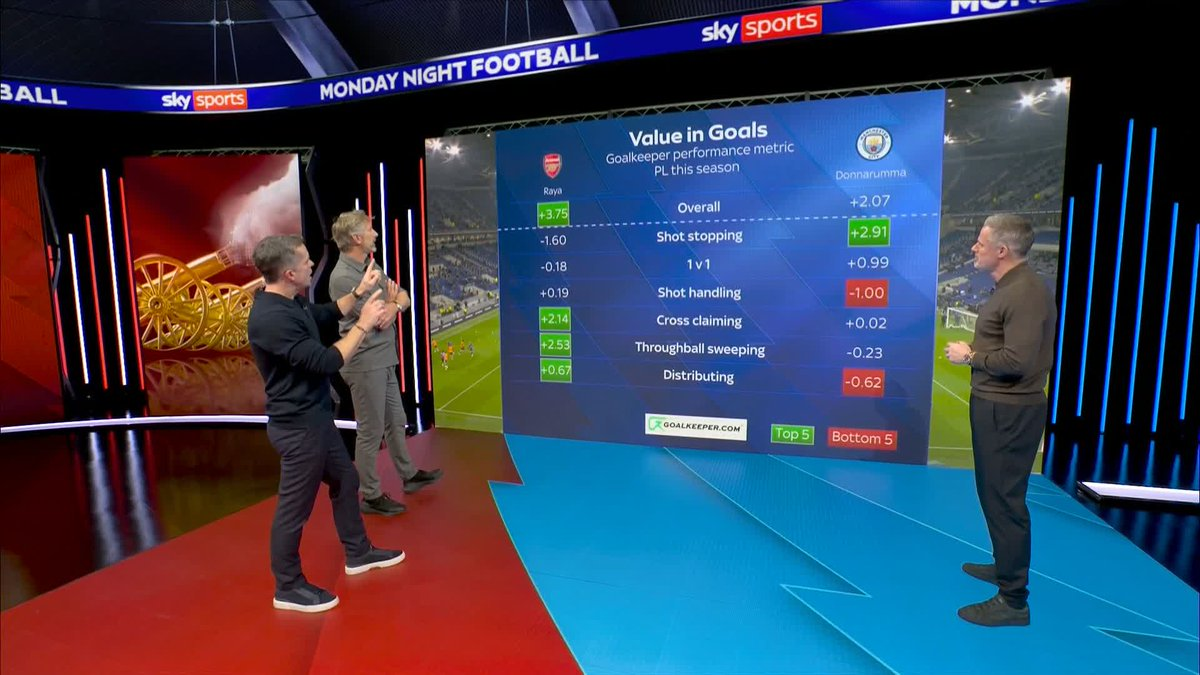
Last night (Monday 23 February 2026), Goalkeeper.com data was featured on Sky Sports’ Monday Night Football programme.The metrics, produced by Dr John Harrison and the data analysis team at Goalkeeper.com, were discussed by legendary Manchester United and Netherlands goalkeeper Edwin van der Sar, alongside hosts Jamie Carragher and David Jones ahead of Everton vs Manchester United. The stats showed a comparison between Arsenal goalkeeper David Raya and Manchester City goalkeeper Gianluigi Donnarumma over the course of the season so far. Who do you think has been the better goalkeeper this season, David Raya or Gianluigi Donnarumma? 💬 pic.twitter.com/pcHoy9Pmqf— Sky Sports Premier League (@SkySportsPL) February 23, 2026 The metrics revealed that Raya has excelled at cross claiming, throughball sweeping, and distribution, and sits in the top five league goalkeepers this season so far overall. Donnarumma, meanwhile, has enjoyed a particularly strong shot-stopping season, but doesn’t currently sit in the top five Premier League goalkeepers overall. To learn more about Goalkeeper.com data, or work with us, email xg@goalkeeper.com to set up a call. 

GN Goalkeeper.com News Desk
Non-League: How to keep a goalkeeper sharp - when you only train twice a week
featured editorial

Non-League: How to keep a goalkeeper sharp - when you only train twice a week

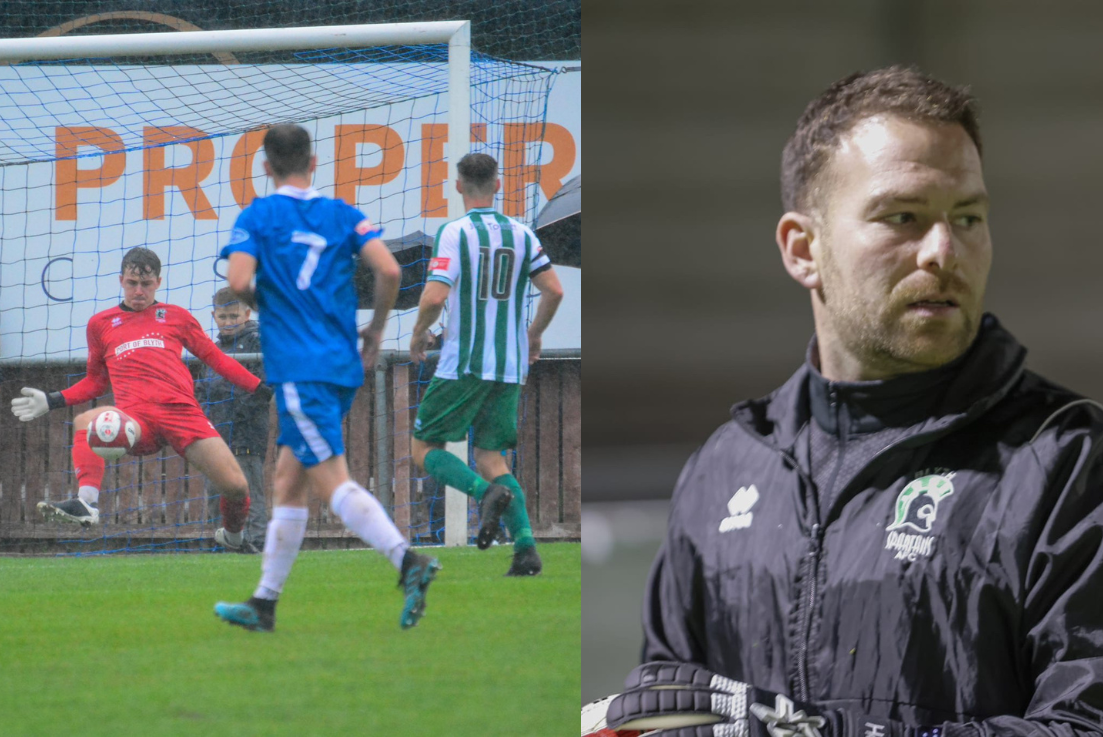
Non-league football is demanding, but many goalkeepers only get the chance to train with their team a few times a week. How do goalkeeper coaches keep their shot-stoppers sharp on part-time schedules? One of the hardest jobs in football is to be a goalkeeper coach of a semi-professional side.Being semi-pro often means that players and coaches combine their love for the game with a full-time day job, meaning that clubs have to train in the evening. If they’re lucky, they get two training sessions per week.One point that needs to be made from the outright is that non-league football is a tough world. The level is good. The players are physical. Whilst from the Premier League rafters and the semi-pro game looks a long way down, the standard is well, well above any amateur Sunday League fixture. If the levels were really that far apart, how on earth could Macclesfield beat FA Cup holders Crystal Palace? This is why proper preparation is important - and even more of a challenge to maintain. As Phil Hogg, the goalkeeper coach for Northern Premier League East side Blyth Spartans describes, keeping part-time goalkeepers sharp can be tricky due to various factors.As he explained to Goalkeeper.com, “We only train twice a week. We train on a Tuesday evening, and we train on a Thursday evening.“Obviously, the winter nights make it tougher to try and get a facility. Fortunately, we've got a little bit of a connection with the juniors, they've got a massive 3G facility, so we get use of that, which is really good.“With the goalkeepers, it's really tough because I want to coach them, and then I've got the manager tapping us on the shoulder saying, I want them in here, because I want to practice on some set plays, or a bit of shape or anything like that.Blyth Spartans' goalkeeper coach Phil Hogg“So of course, it's hard to try and carry more than one goalkeeper; only one can play. We've kind of chosen a number one, and the commitment I made to him was that your training sessions will never dip.“I went and created a pool of younger goalkeepers, who we've got on the books, and we've dual registered them, so they're playing in the Northern League. They're still getting that little bit of experience in the Northern League. But the commitment I made to them, and our number one goalkeeper, is that you still come and train with me. So, we've got at least three on a Tuesday and at least three on a Thursday. There could be different goalkeepers, but our first-choice goalkeeper is always there.“I get a minimum of half an hour per session, one-to-one, all goalkeeper training. After that, it's sort of into what the manager wants and then, you know, the small-sided game at the end. In an average week, they're probably getting an hour maximum. So, when you say you're training twice a week, it then comes and knocks down again because of the other stuff."Hogg has a four-part rule for making the most out of sessions with his goalkeepers. "We always try and make it quick, make it busy, and make it enjoyable and realistic; those are the four things we look at. Now, by bringing in the extra goalkeepers, that one-to-one training isn't very realistic in a game situation. We do a lot of different variations on drills and movements to go to the next stage. So, you might make a save, and then what's next? "We're always trying to push it on. We always play in a live format. So, if we're serving and the goalkeeper drops one, we're always playing for rebounds, to make them sharp, to try and keep them on their toes all the time.“We always look at areas to improve, and I think that has definitely come on in the last 10 to 15 years with analysis now.“It's very rare you don’t see a game not being videoed on VEO, or something, which, when I played, thankfully, there weren't any cameras, because let's be honest…there are two sides to that! One, the videos are superb for analysis. There are things you can work on, and there are also things you can see that we’ve worked on that last week and say look at that save you've made. "'The other side - which affects mindset as well - 10 or 15 years ago, if I made a mistake, it was seen by 300 or 400 people in the ground. How many times does a video get watched by fans? So, you've got to be willing to have the mindset that everybody's seen that mistake now. How do you react? What do we do to make you comfortable to go on and be able to not make those mistakes?“So, there's definitely a mindset within the individual that you need to have", he admits. Hogg acknowledges that the goalkeepers themselves have a key role in ensuring that limited training sessions are used productively. He references Blyth Spartans' current goalkeeper Callum Dobson as good example of this. But training is, of course, only one aspect of a goalkeeper coach's work, as the bulk of Hogg does at semi-pro level comes on a matchday. Speaking about a typical matchday schedule, he starts first thing in the morning. "It's the text, how are you? Are you feeling fresh? Are you okay? You're not sick, you're not poorly. I don't need somebody else and then, generally, I'll get to the ground around about the same time as our goalkeeper.Blyth Spartans goalkeeper Callum Dobson, Image: Jordan Armstrong (Jarmphotos on Instagram)“We'll have a sit-down, we'll have a chat, we'll do some analysis of the other team. Do they play a long ball? Have they got a big centre forward? Do we need to be aware of playing a bit higher? So that analysis, again, comes in that way, looking at the other team."Then a little bit of preparing mentally. But you've got to trust him to do that. That's where the element of trust comes in.“Then it's the warm-up and just constant reassurance, just making sure that everything I do is for the benefit of the goalkeeper. Warm-ups, I tend to go by what he wants, because it's up to him to get himself set and what he feels he's comfortable in having.“During the ninety minutes, I don't really watch the game. I kind of sit and look at him, and then as soon as the halftime whistle goes, I'm not in the dressing room, I'm straight across to him, and we're already having a little analysis or a debrief coming off the pitch before he gets to the changing rooms.“So that is the end of the week, and then we'll start again on the Sunday, and analyse again.”

RS Richard Scott
Nicolas Nerinckx interview: the importance of goalkeeper integration with the team
featured editorial

Nicolas Nerinckx interview: the importance of goalkeeper integration with the team

Belgian goalkeeper coach Nicolas Nerinckx discusses how goalkeeper-team alignment is crucial in scouting, training, and philosophy. “Act reliably for your teammates but act unpredictably for the opponent.”Those are the words of Belgian goalkeeper coach Nicolas Nerinckx, currently plying his trade at Belgian second division side RWDM Brussels. Following a youth playing career at Anderlecht as part of Belgium’s 93’ generation, alongside the likes of Romelu Lukaku, knee injuries and a strong passion for coaching promoted Nerinckx to end his playing career early and embark on a new journey as a coach.  In 2017, he returned to Anderlecht’s academy at just 23 years old as a youth goalkeeping coach. During his time there, Nerinckx worked with several promising talents including now-Standard Liege goalkeeper Mathieu Epolo and Lommel SK goalkeeper Matthias Pieklak, before joining the club’s U23 side. There, alongside coaching, he played an active role in first-team recruitment. The Belgian’s next destination was City Football Group outfit Lommel SK in 2024 to work under former Arsenal defender and assistant manager Steve Bould.The words that opened this article are a testament to Nerinckx’s belief in the importance of the integration of the goalkeeper with the rest of the team. “I want to win, but in a beautiful manner,” he says, speaking exclusively to Goalkeeper.com. “I was raised in an academy that was all about winning in the technical, proper way. I like to see teams play out from the back.”However, there are nuances to Nerinckx’s outlook on playing out, prompted by adaptations to specific scenarios. “If you’re a team that plays out from the back, you can become too predictable and easy to press, and you’ll get punished.”The key to this decision making process is an understanding of what the outfield unit is trying to accomplish. At RWDM, Nerinckx explains how “the goalkeepers are integrated into specific build-up drills for 45 minutes, at least two days per week. I also try to prepare my goalkeepers with video analysis. I send it to the goalkeeper and say we’ll talk about it during or after training. Overall, I have my individual approach with the theory and video, but I strongly believe in designing sessions collaboratively with the head coach to integrate the goalkeepers with the outfield players as much as possible to make them comfortable in a variety of game-realistic situations.”Nerinckx firmly believes that a goalkeeper must fully understand the team’s outfield tactical framework, which influences his conduct during training sessions. “I see myself as an assistant coach with a specialisation in goalkeeping. Coaching goalkeepers today extends well beyond shot-stopping drills. It requires a clear philosophy on building from the back, managing goal kicks and defensive set pieces, guiding the defensive line, organizing box defending, and coordinating offensive marking. It's all connected.”Over the years, Nerinckx has evolved, and his growing confidence and knowledge have created a cooperative dialogue between outfield players. This has allowed the Belgian to swap perspectives with others and develop stronger bonds. “As a goalkeeper coach, you also  have the opportunity to leave a mark on other players as well. You need to get the trust of other players. Sometimes, I offer advice to outfield players. In unit-specific drills or individual development programmes, the assistant coach and I might design a striker’s finishing drill where I provide input from a goalkeeping perspective, for example showing the striker how to adjust their approach to gain an advantage over the goalkeeper. This season, I have also been advising defenders to strengthen collaboration with the goalkeeper, all aimed at minimising a striker’s scoring opportunities.”“In goalkeeper training, we start by working on technical skills, but I rarely tell my goalkeepers how to make a save. In my philosophy, the “how” of making a save is defined as execution. But to effectively analyse a goalkeeping action, I consider: position, perception, decision-making, and execution. This framework allows me to deliver clear, structured, and targeted feedback to my goalkeepers relevant to specific phases of the game.“I’m just trying to help them with their qualities, perform better and develop. I look at things from an analytical point of view. Once you have this ongoing cycle, then there’s trust. We have synergy and collaboration between our units.”Nerinckx’s training schedule at RWDM is varied and organised, balancing goalkeeper-specific work and team activities. “I have a 45-minute session with the goalkeepers every day. On Monday, I'll create game situations where shot stopping and cutbacks are being trained in announced and unannounced drills.“We might have Tuesday off, then on Wednesday we’ll do 1v1s and shot stopping from a short distance with a focus on power endurance for a more physical approach. “On Thursday (match day minus two), we focus on match scenarios, including crosses, dead balls played in behind, and defensive set pieces. The physical load is lower, and we moderate between repetitions for a more tactical viewpoint. We also look for scenarios we need to solve for the upcoming weekend, such as set pieces, transitions or build-up. On Friday, the focus shifts to sharp reactions and game-based scenarios.” Part of the development of his 360 approach to coaching was spending time as an Anderlecht scout between 2020 and 2023. “In my role as first team goalkeeper scout in the summer of 2020, our team was tasked with recruiting two new goalkeeper profiles. Working within a limited budget, we looked at over 300 goalkeepers worldwide. That summer, we successfully signed Timon Wellenreuther and Bart Verbruggen. Six years later, Timon is the captain of Feyenoord and Verburggen is a number one in the Premier League.Whilst compiling lists of potential players, there was one profile I was particularly drawn to: Antonin Kinsky, who is now at Tottenham Hotspur. I had tracked him from day one, when he was at Dukla Praha, and I had reviewed his performances with the Czech Republic U17s at the World Cup. “After researching his personality and hearing numerous positive reports, I placed him at the top of my recruitment list. But, his move to Tottenham made him a target that was no longer feasible within the Belgian market.”Finds like that should take the Belgian goalkeeper coach far. But still in the formative years of his coaching career, Nerinckx has plenty of learning to go - and energy to give. When asked for his advice to young coaches, he replies: “Dream big and trust in your convictions, even when it demands sacrifice. Pursue what you believe in. That mindset will help you grow and open doors to opportunities you deserve.”

AC Alex Connor
Alex Smithies exclusive: a fairytale Play-Off, playing under Warnock, and preparing for life beyond football
featured editorial

Alex Smithies exclusive: a fairytale Play-Off, playing under Warnock, and preparing for life beyond football

Alex Smithies experienced Wembley success and Premier League dressing rooms, but one of his most important achievements was preparing well for life beyond the pitch. Now, he's helping other footballers do the same. Header image: Shutterstock“I was at Leicester, third-choice, and my knee finally got the better of me.”Former Huddersfield, QPR, Cardiff, and Leicester goalkeeper Alex Smithies was 33 when he was forced to step away from the game he knew all his life, following almost 500 senior games, a promotion with his hometown club in fairytale circumstances, and eight surgeries.However, unlike many who find themselves at a desperately and dangerously loose end regarding their football careers, he was more than prepared.“I now work with the financial planning firm that I was a part of throughout my career, now helping the current crop of players set themselves up financially for the future,” Smithies, now Business Relationship Manager at Brooks Sport, explains to Goalkeeper.com.“A lot of the resources there are now weren’t around when I started playing professional football at 17 - you see players at the highest level going bankrupt, and they need the right advice around them.”While we’ll soon tap further into his burgeoning career in the sporting world of financial planning, Smithies was foremost an established goalkeeper who was thrown into the spotlight far earlier than most.Still maintaining the broad West Yorkshire brogue, he made his debut for boyhood side Huddersfield Town in a defeat away at Southend United before he was old enough to buy a local ale to celebrate it.“My debut was strange, really. It came at 17, and I wasn’t ready for it at all. We had a goalkeeping crisis. It was a real baptism of fire.“It probably did accelerate my career path, though, because I was exposed to the level of those big games with first-team players. It’s likely the reason I became first-choice at 18, which is unusual for a goalkeeper.“One coach who stands out for me is John Vaughan at Huddersfield Town. He saw something in me and really pushed me. As most goalkeepers will know, having a coach on your side in meetings when you’re not around, having your back - that’s massive.”Fast-forward to May 2012, and the pinnacle of hometown memories occurred for Smithies, who lashed home the last of 11 Town penalties in the most agonising of Wembley shootouts against county rivals Sheffield United - in front of former classmates from his village of Golcar, no less.Goalkeeper Alex Smithies was @HTAFC's hero in the 2012 @SkyBetLeagueOne Play-Off Final. 22 penalties later... promotion secured! EFL | StayHomeSaveLives pic.twitter.com/rCZN86pMpb— EFL (@EFL) May 4, 2020 He and opposite number Steve Simonsen swapped places mere seconds later, and the Blades goalkeeper blazed over to send the Terriers into the Championship.“It’s fairytale stuff. I’d been injured with the start of the knee issues that I’ve had, and I managed to get back around the play-offs. The emotion after that game is something I’ve never felt since.“The shootout went on longer than any of us expected, and I thought I’d have to save another one in a minute before I ended up taking one. Then it happened.“As I put the ball down, I remember seeing people I went to school with behind the goal. It was completely surreal. In the end, I just essentially took a goal-kick, and the rest is history.”A sudden move south came about in 2015 when Huddersfield accepted a Queens Park Rangers bid for Smithies, who had to move to the capital just days after becoming a father - but a former England number one was able to act as a key mentor.“Everyone thinks goalkeepers get better with age, and that certainly happened with me,” he recalls. “You become more reliable with experience and with your decisions. One of my regrets is that I left Huddersfield at 25, because I don’t actually think they saw the best of me.“The way the QPR move came about was bizarre actually, because I’d had my first daughter that week, and had been at Huddersfield all my life. They told me they’d accepted a bid, and suddenly I was driving down to London - it was an interesting conversation with my wife.“Rob Green was there and he was actually supposed to leave, so I at least had some time in the background to get settled. It was great to see how he worked, too, given his career.”Aiming for the bright lights of the top flight, Smithies spent four years over the Severn border at Cardiff City, operating under Neil Warnock.News just in : the save of the season competition is over.Alex Smithies - Number One.afcb ccfcpic.twitter.com/NLsFwvvo8F— Jason Mohammad (@jasonmohammad) October 21, 2020 While he was unable to dislodge Neil Etheridge as the Bluebirds’ Premier League stopper, he insists his time in South Wales served him well - and the stats back it up. Smithies went on to become Cardiff’s Player of the Season in his final campaign at the club following nearly 100 appearances. It led him to reminisce on some of the other iconic individuals for whom he has kept goal down the years. “Cardiff had just been promoted, and Etheridge was there who had done really well. However, he ended up playing the entire season and won Player of the Year. It was difficult to take as I’d have loved a Premier League opportunity, but the goalkeeper union was so strong.“Working with Warnock was an eye-opener. We’ve all seen the YouTube videos; he was that entertaining. He was actually tough on the goalkeepers! But once you had him onside, he was great”, Smithies reminisced. Whilst no Warnock-era story from the Cardiff dressing rooms Smithies was a part are deemed PG for half past ten on a Tuesday morning, the Englishman admits that “one thing I’m grateful for now that I've retired is that I’ve played for so many of the game’s big character managers: Neil, Mick McCarthy, and Ian Holloway. “Mick’s honesty was great - you’d even feel valued if he told you that you were awful in a game. Ian, I could write a book on his stories from QPR - on his first day, he made us watch Coach Carter from start to finish. There are a lot of stories I could tell about them, but they’re not for daytime!”A switch to Leicester City followed, and for a ‘keeper who’d begun at such tender years, Smithies was struggling increasingly with the knee issues which would later curtail his 17-year professional career.He identifies the ideal role he was given under Brendan Rodgers, and how that contrasted with the arrival of future Chelsea boss Enzo Maresca.“At Leicester, realistically I knew where my body was at,” he admits. “I was 32 - it may be a prime for goalkeepers, but I’d started at 17 and my body had taken some big hits. I’d had eight surgeries, and I even almost retired when I was a lot younger. I wasn’t going to be Craig Gordon, playing into my forties.Watch as Alex Smithies joins his new lcfc team-mates for his first training session with the Club in Seagrave 🎞️ pic.twitter.com/QSIevecVzW— Leicester City (@LCFC) August 12, 2022 “I told Brendan I’d be ready to play if needed, but I knew the role, and he was keen for me to mentor some of the youngsters. Brendan had the tactician and man-manager balance spot on.“That changed a bit when Enzo came in - he needed me to train like an 18-year-old; I couldn’t because of my knee, so I had to call time.”While recent retirees evading the coaching pathway often explore the media route, Smithies, 36 in March, has stepped into the world of sporting finance - an increasingly vital aspect of player care - with employer Brooks joining forces with an ever-growing network of clients.“I was always thinking about what I wanted to do after. I’d been sensible with my financial planning during my career which bought me some time, and I’d worked with the company I’m with now as a player,” he divulges.“Ultimately, I want to help other people. I know the people who guided me, and I knew we could broaden that by using my network. Footballers are vulnerable - with some bad people circling around them if they’re earning certain money each week. You want to keep them grounded and protected from what can honestly be a murky industry.“The group looks after almost 300 players now, so a lot of people are benefitting. I’m a case study of the company myself - I was disciplined to be comfortable for life after football, and we’re looking to spread that advice. A lot of them might not appreciate it at the time, but they certainly will later on.”

“It’s our house”: Macclesfield goalkeeper Max Dearnley on his side's miraculous FA Cup giant-killing of Crystal Palace
headline editors picks

“It’s our house”: Macclesfield goalkeeper Max Dearnley on his side's miraculous FA Cup giant-killing of Crystal Palace

Macclesfield goalkeeper Max Dearnley tells the story of his side's knock-out of the FA Cup holders, Crystal Palace. Header image: Ryan Browne/ShutterstockOn a cold mid-January evening in the Baltic north west of England, Max Dearnley sat on the sofa with his dad watching Benidorm. In between laughing at the familiar hijinx of the Garveys, Mateo, and co., he turned to his father and said  “Dad, I actually can’t believe what we’ve just done.”It was a small, domestic moment. And yet it perfectly mirrored the mindset of world football that day, as people across living rooms, pubs, public transport, and group chats were expressing the exact same sentiment: I cannot believe that just happened.The FA Cup has always lived on the unexpected. Giant-killings are the lifeblood of the oldest cup competition in world football. But this was its biggest yet.To hammer home the context you’ve probably already heard, but which bears repeating: sixth-tier Macclesfield knocked out Premier League Crystal Palace - the holders - in a third-round shock that cannot be overstated. No side from their level had ever eliminated a Premier League club, let alone the reigning champions. The Silkmen train just twice a week. Most of the squad have day jobs. Their most recognisable face is Tom Clare, better known for a stint on Love Island than his work in the final third.And behind it all, with the best seat in the house as history unfolded in front of him, was the Macclesfield goalkeeper, Max Dearnley.THIS IS REALLY HAPPENING! 🤯🤯Non league Macclesfield lead FACup holders Crystal Palace 2-0!!!Isaac Buckley-Ricketts pokes home their second goal 👏👏 pic.twitter.com/JzgNGQn6Ji— Match of the Day (@BBCMOTD) January 10, 2026 We spoke to Max to understand what the greatest giant-killing of all time actually felt like, from a goalkeeper’s perspective.“I honestly just treated it like another game,” Dearnley admits. “If anything, there was less pressure on us than in most league games. Nobody expected us to win, so we just went out there and played.”That approach began well before the 12:15pm kick-off. The early start, unusual at this level, ended up working in Macclesfield’s favour. “We literally woke up, had breakfast, and went straight to the ground,” Dearnley says. “There was no time to sit around thinking about it. No time to stew over what was coming.”Even the preparation in the days before had been noticeably low-key. “Training was short, sharp, and pretty normal, if I’m honest. There wasn’t this big build-up. The gaffer didn’t want us overloading our heads with information. It was just technical bits, shape work, and then off home,” Dearnley says.There was no theatrical siege‑mentality speech, no hour‑long video sessions on stopping Premier League movement. Nothing in the days before kick-off hinted that this group of part-time footballers were walking towards something that would be replayed for years to come.“It honestly just felt like half-day prep for a league game,” Dearnley laughs. “I think that helped us massively. It stopped it becoming bigger in our minds than it needed to be.”As kick-off edged closer, the magnitude of the day did begin to press gently at the edges of Dearnley’s thoughts. He is human, after all. The first flicker of nerves didn’t arrive on the pitch, but in the car park.“As soon as I saw all the cameras and media outside - and my dad being interviewed by Michail Antonio for some reason - I was a bit nervous,” he admits. But the nerves didn’t linger. “The warm-up was fine. The tunnel was fine. And once the game kicks off, it’s just football. Ninety minutes, 11 v 11 - you’ve got a chance.” For a goalkeeper, this sense of normality is a weapon. Within minutes, the occasion had been reduced to its simplest form: keep it out of the net.When the whistle finally blew, it didn’t feel like the start of some inevitable fairytale - at least not at first. Macclesfield did what underdogs are supposed to do and they did it well. They pressed, chased every second ball, and won territory by sheer desire. Palace looked oddly flat, almost bewildered by the intensity and relentless energy of their hosts.There was a wonderful moment at the end of the FA Cup tie between Macclesfield and Crystal Palace in what was the biggest upset in FA Cup history.🏆As the Macclesfield supporters celebrated on the pitch the travelling away support from Palace stayed behind to applaud the… pic.twitter.com/rI6FjwfuXM— Proper Football (@ProperFootball8) January 11, 2026 Slowly, a quiet belief began to take hold at Moss Rose. It didn’t arrive with a roar but with rising murmurs and small, accumulating moments. A clearance cheered louder than usual, a 50/50 won, a spell of possession that made the home fans lean forward.On 43 minutes, the previous night’s dreams of everyone in this provincial northern town began to sharpen into reality. Captain Paul Dawson, head bandaged from an earlier collision, peeled away and nodded Luke Duffy’s deep free-kick beyond Walter Benítez’s despairing reach. The stadium erupted. Macclesfield, 117 places below their opponents in the league pyramid, were now leading the holders of the FA Cup - and the impossible suddenly felt a little less improbable.“It did feel surreal the whole 90 minutes,” Dearnley reflected. “But when we went in for half-time, Sam Heathcote turned to me and said, ‘It’s our house.’ We always say that before every game, but in that moment it really hit home - it felt like we could actually win.”Into the second half, Macclesfield’s confidence only grew. On the hour mark Isaac Buckley-Ricketts capitalised on a loose scramble, bobbling the ball slowly past Benítez to double the lead, and suddenly the Silkmen were on the brink of history.“I just turned around, because my dad was in the stands behind me, and I thought, what is going on here? We’re 2-0 up against the holders. That’s mental.”“I thought: I haven’t really been troubled here. If we keep doing what we’re doing, there’s no way we can lose this game. Belief, he explains, comes not just from preparation but from concrete moments on the pitch. “Confidence is massive as a goalkeeper. Once you’ve made a few saves or started the game well, that belief changes everything. You’re not worrying about mistakes; you’re thinking about doing something positive for the team.”Even the late free-kick that brought Palace back to 2-1 didn’t shake him. “It felt like a balloon burst a little.” he says. “But I just took it minute by minute, tried to slow the game down, manage it as best I could. As a goalkeeper, you’ve got to control what you can and hope the final whistle comes soon enough.”HISTORY IS MADE! 🤩Sixth-tier side Macclesfield FC knock FA Cup holders Crystal Palace out of the competition! 😳📺 @tntsports & @discoveryplusUK pic.twitter.com/dz0wIxT3qH— Football on TNT Sports (@footballontnt) January 10, 2026 For the man between the posts, there’s no hiding place in a cup tie like this. Dearnley’s job was a strange blend of long stillness and sudden intensity.“When the fans get behind you, it gives you that extra edge, even in long quiet spells,” he says. While outfield players can ride the energy by running more and tackling harder, a keeper has to store it, ready for the one moment that matters.“I think being vocal when it’s quiet is important. It keeps your mind engaged on the game, so if you are called upon, you’re still switched on - whether it’s a save, a cross, or coming to clear something over the top.”There’s also a pragmatism to his style that suited the day. Goalkeeper’s mistakes are different. An outfield error might be forgotten by the next attack. A keeper’s misstep usually ends in disaster.“I try to limit the chance of something going wrong,” he says. “Nobody’s going to look back on that game and think, ‘Why didn’t he clip it down the line?’ But if you try that and they intercept it when you’re miles out of your goal, that’s what people remember.”If the performance showed composure, the celebrations were pure emotion. Some players went straight out into town. Others stayed in the clubhouse, pulling pints, posing for pictures and soaking up the atmosphere with family and fans.“We all just wanted to be together and savour the moment,” Dearnley says. “It didn’t really sink in as to what we’d done until a few days later.”The win hasn’t changed how he sees himself or the team. Macclesfield remain grounded, anchored by the influence of John Rooney.“The FA Cup is nice, but the league is our bread and butter,” Dearnley says. “We’ve just got to take it game by game. If we have an amazing cup run but don’t do well in the league, then the effort means nothing.”What has changed is the club’s place in the wider story of the competition. It’s an upset that will be mentioned whenever people talk about what the FA Cup can be.“It’s a special moment that everyone will look back on - showing our kids, grandkids,” Dearnley says. “Nobody had an average game. Everybody played unbelievable that day. For that result to happen, that needed to happen.”If there’s a thread that runs through Dearnley’s story of that afternoon, it’s mindset. Belief. Composure. Refusing to let fear dictate your decisions.“Have no fear,” he says, when asked what advice he’d give a young goalkeeper. “Fear kills your game. You’ve got to go into a game thinking, what’s the worst that can happen? You make a mistake. All goalkeepers make mistakes. That happens.”“If you have no fear and go into a game trying to enjoy it, you’re going to play the best football that you can physically play.”It’s the same fearlessness that helped Macclesfield stare down the FA Cup holders - and win. And if they carry that mindset into the rest of the competition, nobody will underestimate whose house they are walking into.Macclesfield host Premier League side Brentford at home in the Fourth Round of the FA Cup on Monday 16th February at 7:30PM GMT. The match will be shown live in the UK on television: channels TNT Sports 1 and Discovery +.

CT Callum Turner
From heart surgery to the cusp of the Champions League: an interview with Noelia Ramos
headline editorial

From heart surgery to the cusp of the Champions League: an interview with Noelia Ramos

Spanish goalkeeper Noelia Ramos has conceded the second-least league goals in Liga F this season. It's a dream campaign for more reasons than one.“I was born a warrior, and I’ll die a warrior.” What might sound like a simple slogan is, for Noelia Ramos, nothing short of a life philosophy.The current CD Tenerife goalkeeper entered the world with two twisted aortic arteries that made breathing difficult. At just five months old, she underwent heart surgery. Doctors warned that high-intensity sport might one day be out of reach. They were wrong.Now 26, Ramos has conceded the second-least number of goals in Spain’s Liga F, behind only Barcelona’s Cata Coll. And that’s not the only statistic turning heads. With Ramos between the posts, Tenerife remain unbeaten this season, a run that has put the club within touching distance of a historic Women’s Champions League dream.Her story stretches far beyond a fairytale season at the club she calls home. It goes back to when she was 11. Frustrated by barely touching the ball as a forward, she turned to her father and said: “Dad, I want to fly like the goalkeepers.”Ramos had first kicked a ball at six, alongside her sister Natalia - who still shares a dressing room with her in the top flight - playing in a mixed league. Stationed as a number nine, she quickly grew bored and decided it was time to become a warrior in goal. Her father, recognising her determination, didn’t hesitate.😍 A Noelia Ramos le encanta 𝐜𝐞𝐥𝐞𝐛𝐫𝐚𝐫 los goles de su equipo LigaFMoeve | CostaAdejeTenerifeRealSociedad pic.twitter.com/MMwEMujr8h— Liga F (@LigaFoficial) February 1, 2026 “The very same day I told them I wanted to be a goalkeeper, my dad took me to Decathlon and bought me gloves and all the right kit so I’d be fully equipped the next morning. And because I was so sure, my parents also enrolled me in a specialist goalkeeping academy.” That choice didn’t just change her position on the pitch. It defined her life.Because that academy is perhaps what has shaped Ramos' career the most. At a time when women’s football lacked the resources it has today and goalkeepers rarely received proper training, Ramos was already honing her technique twice a week, learning alongside keepers from different age groups.“I learned skills that still serve me today, and I feel it’s one of the things that defines me as a goalkeeper. I was very lucky, and I knew how to make the most of it,” she says.At that academy, Noelia was the only girl. She was a rare bird who soon began to stand out. “When I started training, they could see I was improving and performing well, and often I was moved up to train with the older group. I knew the strength difference and all, but for me it was a challenge. I remember some of the boys asking, ‘Why do you let Noelia train with the older ones and not me?’ And the answer was always performance - it wasn’t because I was a girl, it was because they liked how I played.”Her performances soon caught the attention of her current club. “The call came for both me and my sister at the same time. Honestly, it was intimidating because it meant playing with girls almost twenty years older than us. My dad said, ‘Just try it first, and we’ll see what happens.’ But once the ball starts rolling, age doesn’t matter, so we didn’t hesitate and signed for CD Tenerife.”That decision came with a huge family sacrifice: 160 km on the road every day to train in the south, balanced with studies to get into university, and, on top of that, goalkeeper school. “It was tough, but it was worth it. Look at us now — both playing and with university degrees.”Energía emocional ➕3️⃣✨😍💪🏻🗣️🥅🚫 @CDTFemenino pic.twitter.com/M2wZ2y2uCU— Noelia Ramos (@Noelia99Ramos) January 19, 2026 Noelia earned her degree in early childhood education, all while continuing to graduate in the goalkeeping world. And although her name may not yet be as well known as some others, she already knows what it’s like to win a championship with Spain. She has tasted success on the international stage, being part of Spain’s U-17 and U-19 European Championship wins and personally winning the Golden Glove at the U-17 World Cup. Much of that journey ran parallel to Cata Coll’s - the goalkeeper who now tops the senior statistics Noelia chases.“We were in almost every tournament together. I played the first World Cup, she played the second. Now she’s in the Spanish national team, and I dream of getting there one day.”Ramos fondly recalls a healthy rivalry with the Barça goalkeeper and the lasting influence of her early coaching. “On one of my first national-team calls, Manolo Amieiro - the goalkeeping coach who also worked with Iker Casillas at Real Madrid - told me, ‘Canary, you’ve really worked on your technique there,’” she remembers.There is another part of her routine that has been equally formative: regular work with a sports psychologist. “For me, the psychologist is a habit in my life, like eating or sleeping. I work on where to put my focus and what to give my energy to. When you play professional football the stage is public and so is opinion. In a world where you’re so exposed, it’s important to know what to turn down. Always working with the best energy.”That mindset helped her through two years as a backup and continues to underpin her role as CD Tenerife’s talismanic goalkeeper. A shot-stopperwho, like many Spanish players, enjoys playing with her feet and describes herself as “confident, agile, quick off the line, and with a good touch on the ball.” She admits that the players who have given her the toughest challenges are Aitana, Alexia, and Claudia Pina - but those are also the matches she enjoys most and where she consistently performs at her peak.Fully aware that the standard for women’s goalkeepers in Spain has risen sharply and that competition is fiercer than ever, Ramos still has a clear target: a senior debut for the Spanish national team and a steady climb up the seasonal charts for the fewest goals conceded.Behind that ever-present smile lies unseen, meticulous work. Hours of technical drills, mental preparation, and recovery, all fuelling her performances on the pitch. It is this quiet, relentless dedication that allows her to deliver her best, match after match, while dreaming of ever greater challenges.It is the same commitment that keeps the goalkeeper who once defied medical predictions flying high.Para leer en español el artículo, continúe bajo.“Nací guerrera y moriré guerrera”. Lo que puede parecer un simple eslgoan es para Noelia Ramos un modo de vida. La actual guardameta del CD Tenerife nació con dos arterias aortas enrolladas que le dificultaban la respiración. Con tan solo cinco meses fue intervenida del corazón y aunque según los médicos iba a ser complicado que algún día practicara deporte de alta intensidad Noelia es ahora la segunda cancerbera menos goleada de Liga F por detrás de Cata Coll. Y no solo eso, con ella en la portería su equipo todavía no sabe lo que es perder en lo que va de curso, algo que evidentemente les acerca al sueño de poder disputar Liga de Campeones.Pero su historia va más allá de una temporada de ensueño en el club de su vida. Su historia se remonta a cuando con 11 años y cansada de que no le llegaran muchos balones en la posición de delantera Noelia le dijo a su padre: “Papá yo quiero volar como los porteros”. En aquel entonces Noelia, que había empezado a patear el balón a los 6 años con su hermana Marta, con la que sigue compartiendo equipo en la elite, jugaba en una liga mixta y se aburría en la posición de 9. Por eso su padre, visto el convencimiento de su hija no dudó el camino a seguir. “El mismo día que les dije que quería ser portera mi padre me llevó a un Decathlon y me compró unos guantes y la adecuada para que al día siguiente ya estuviera equipada. Pero es que además como yo lo tenía tan claro mis padres decidieron inscribirme en una escuela de tecnificación de porteros”.Y eso es lo que más ha podido marcar su trayectoria. Porque en un momento donde el futbol femenino no tenia los recursos que tiene ahora y las porteras no recibían los entrenamientos adecuados, Noelia entrenaba técnica dos días por semana y compartía experiencia con porteros de diferentes categorías. “Aprendí técnica que a dia de hoy todavía me sirve y siento que es una de las cosas que más me define como portera. Fui muy afortunada y lo supe aprovechar”. En aquella escuela Noelia era la única chica, una rara avis que pronto empezó a destacar sobre el resto. “Cuando empecé a entrenar vieron que iba creciendo y que a nivel de rendimiento respondía y muchas veces me subían con el grupo de los mayores. Yo era consciente de la diferencia de fuerza y de todo pero para mi era un reto. Me acuerdo que además había niños que preguntaban ¿por qué subís a Noelia y no a mi? Y la respuesta era el rendimiento, no es que me premiaran por ser chica, me subían porque les gustaba cómo lo hacía”. Un rendimiento que pronto también llamó la atención de su actual club. “La llamada nos llegó a mi hermana y a mi a la vez. Y la verdad es que nos asustamos porque significabaempezar a jugar con chicas que nos sacaban casi 20 años, por eso mi padre nos dijo ‘primero probad y luego ya veremos’. Pero la verdad es que cuando echa a rodar el balón ya no hay edad así que no lo pensamos dos veces y fichamos por el CD Tenerife.” Y ahí llegó el gran sacrificio de la familia. 160 km de carretera diarios para ir a entrenar al sur compaginados con los estudios de bachiller para entrar en la universidad y evidentemente la escuela de porteros que Noelia compaginó incluso estando en la elite.“Fue duro pero ha merecido la pena. Porque míranos ahora, las dos juagando y con carreras universitarias”. Noelia se licenció en magisterio infantil y sigue graduándose en la portería. De hecho, aunque su nombre no pueda sonar tan conocido como otros, ya sabe lo que es ganar un campeonato con España. Fue campeona de Europa sub-17 y sub-19 y se coronó con un guante de oro en el Mundial sub-17. Un camino que compartió con la guardameta con la que ahora pelea en estadísticas: Cata Coll. “Coincidimos en prácticamente todo los torneos. El primer mundial lo jugué yo y el segundo ella. Ahora ella está en la absoluta y yo sueño con llegar algún día.” Quizás vuelvan a compartir meta, almenas es lo que anhela Noelia, que recuerda una competencia bonita con la guardameta del Barça. De aquellos tiempos también recuerda la influencia de su escuela. “En una de las primeras llamadas de la selección recuerdo que Manolo Amieiro, entrenador de porteras y formador entre otros de Iker Casillas en el Real Madrid, me dijo ‘Canaria, allí la técnica la has trabajado bastante eh’”. Es algo en lo que sigue insistiendo con su entrenador de porteras. Aunque hay otra parte de su rutina que también le hace crecer: el psicólogo. “Para mi el psicólogo es un habito de mi vida como el comer, el cenar, el dormir. Trabajo sobre todo dónde poner el foco y a qué dedicar mi energía. Cuando juegas a futbol profesional el escenario es publico y la opinión también. Y en un mundo en el que estás tan expuesto es importante saber a qué cosas bajarle el volumen.Siempre tanto de trabajar con la mejor energía.”Es algo que sin duda le ayudó durante los dos años de suplencia. Y le sigue ayudando para ser esa guardameta ‘talismán’ del CD Tenerife. Una guardameta que como buena española disfruta jugando con los pies y que se define como “segura, ágil, rápida de reflejo y con buen toque de balón”. Asegura que las jugadoras que más difícil se lo han puesto son Aitana, Alexia y Claudia Pina. Pero también que esos son los encuentros de los que más disfruta. De ahí seguramente al rendimiento que deja en ellos.Por eso aun siendo consciente de que el nivel de las guardametas ha ido creciendo en los últimos años y que la competencia en España es elevada, sueña con el debut en la absoluta y con ir quedando temporada tras temporadas en el ranking de porteras menos goleadas. Porque detrás de su sonrisa interminable se esconde un trabajo invisible, a la sombra, que le ayuda sacar su mejor versión partido tras partido. Un trabajo con el que la guerrera que hizo añicoslas predicciones medicas quiere seguir volando en las mejores porterías de España.

IV Irati Vidal Asla

Never miss an editorial

Long-form goalkeeping writing, delivered to your inbox. No spam. No outfield content. Just depth.

Archive

Older pieces that still hold their weight. Find what you missed.